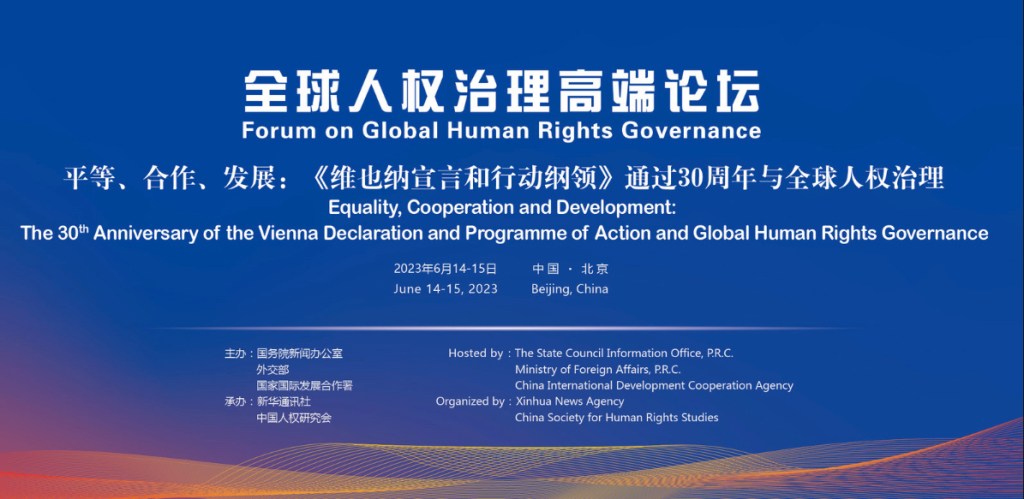
The Forum on Global Human Rights Governance is organised at a critical time when our humanity,more than before, seeksto warrant the human rights for peace, prosperity, and lasting cooperation for all.
Sharing country-specific experiences on the appropriate governance for human rights comes at an opportune time.The issue topic is enormously broad, with diverse factors influencing the outcome. Hence, your thoughtful input and in-depth discussionsof the issues during this Forum will undoubtedly contribute to the further refinement of required governance.
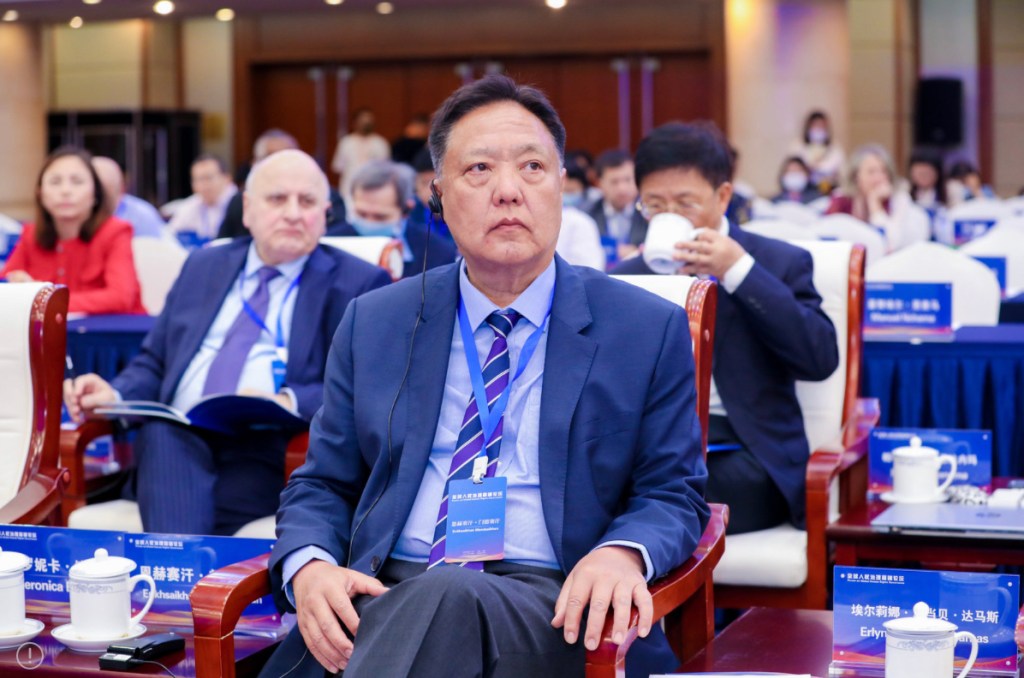
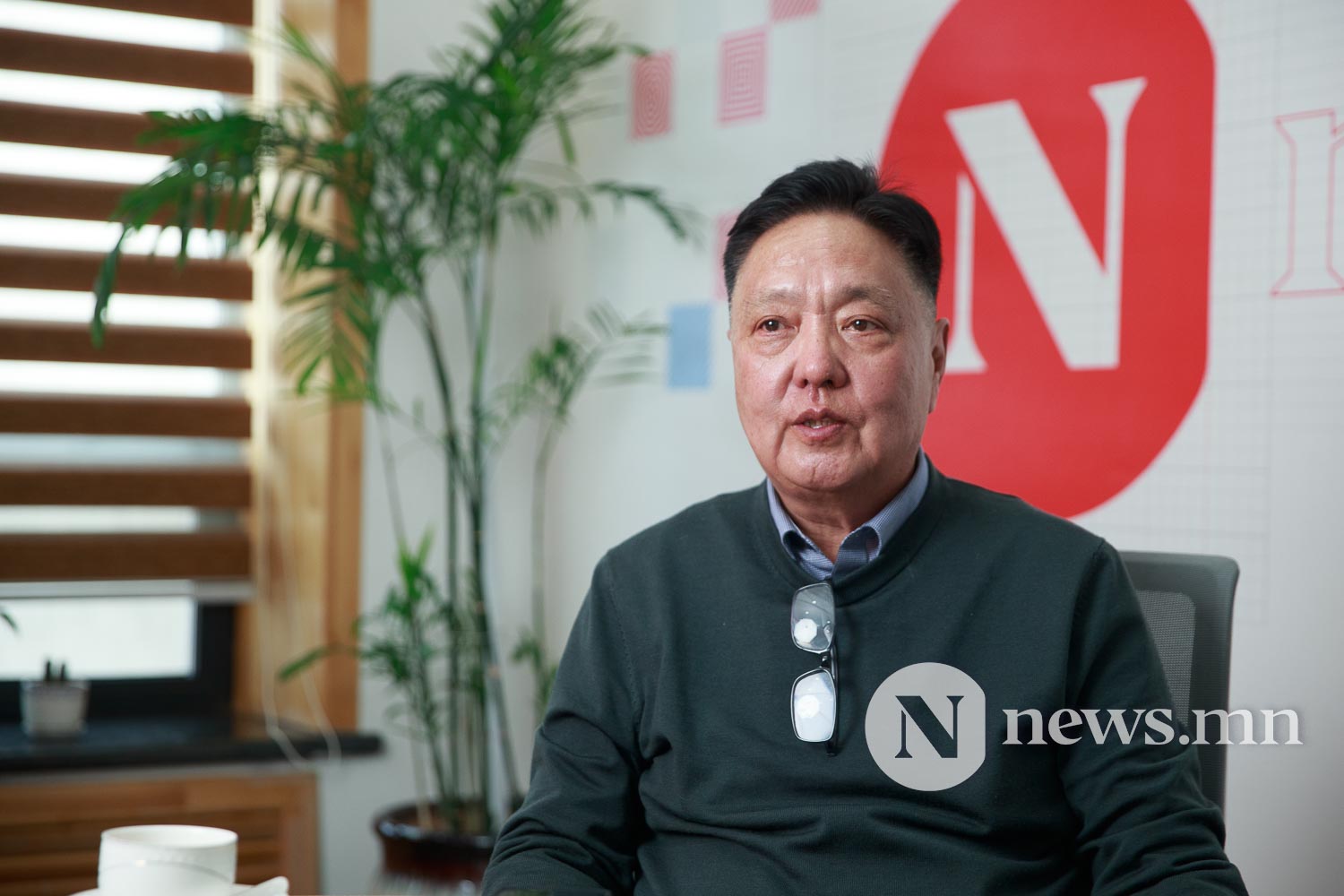
My contribution to the Forum is to share research on the experience of women in our politics. Specifically, the many factors contributing to their underwhelming participation in political decision-making. The findings may be of interest to this Forum given my representation ofthe multi-party state of Mongolia, inparticular its Democratic party.
Warranting women’s full and equal participation in the political process is a human rights issue andfoundation for sustainable development and a democratic process. Decisions made with the involvement of women benefit societies by ensuring equality. Unfortunately, our histories, country-specific cultural features, the rate of economicdevelopment, and other factors like gender-specific behavioural differences prevent women from leading active political life, as evidenced in numerous statistics. Because thesesituations prevent us from building inclusive and sustainable development for our societies, the UN has included women’s empowerment as a specific goal we should all aim to reach for the 2030 Sustainable Development Goals. The Beijing Declaration followed in 2020 with detailed calls for action.
Reflecting on this historical moment and assessing the rate of progress to date, it is evident that we have to try harder to remove the obstacles. Although representation of women in national parliaments increased from 11.3 per cent in 1995 to 24.4 today,the rate of change is slow.
At this pace, the World Economic Forum predicted, the gender parity goal cannot be achieved in this century.
Specifically, the change has been especially slow in the last 20 years. As described in the UN report, women’s representation at national parliaments is at 24.3 per cent, and only 10 out of 152 countries (or 6.6 per cent) have women as state and government leaders. Progress is being made on gender issues, but it will take 99.5 years to reach absolute parity between genders, said the 2020 World Economic Report. This means that the problem is too far out to be resolved meaningfully.
Mongolia introduced gender equality in its constitution in 1924 and upheld it in the subsequent changes of 1940, 1960, and 1992. The ideology was further endorsedbyjoining international conventions and agreements. In 2012, women’s representation in the parliament was 14.5 per cent and increased to 17.6 per cent in the 2020 election. Although this is the recordnumber in our parliamentary history, it is still lower than the world’s average of 24.9 (in 2020) and most Asian countries, where the average is 20.5 (in 2020).
According to the national statistics, our population is 49.15 per cent male to 50.85 female. And according to the World Economic Forum index on gender equality,Mongolia has moved down in recent years. The main reasons for the decline were less participation of women in politics andleadership.
Mongolia’s election law stipulates that the parties and coalitions nominate at least 20 per cent of candidates from women. The law was enacted in 2020, and discussion is underway to increase this number to 30 per cent. Mongolia’s next parliamentary election is in 2024. Therefore, the debateabout increasing the threshold to 30 per cent is particularly relevant to increasing the number of women in politics.
International practice has proven that opening doors for greater participation of women in politics leads to better policies and more sustainable outcomes. Increased women participation results in greater social welfare.
When more women are part of the government, more investments are made in education, child nutrition, and women-led entrepreneurship. This leads to greater social progress as these investments alleviate poverty and are the most effective tool for social advancement. But research shows thisprogressis made possible when women take increasing roles in political leadership.
So what constrains women from leadingmore significantpolitical roles? Mongolia research shows that the main reasons are related to the following factors. First, the male-dominated political institutions or hierarchies (35 per cent)prevent women from participating. Second, insufficient voter support for women in general (13 per cent) detract potential candidates, and third, pressures of work-life-family balance (12 per cent) hinder women’s ability to lead active political lives.
Digging deeper, researchers have highlighted the followingdetailsby way of focus group discussions:
1. Women carry most of the responsibilities of family life,and this ‘double’’ load prevents women from taking extra steps in politics
2. Our society still has stereotypical identities for women
3. Because of these stereotypical roles, women take longer to get recognised for their abilities, and
4. More is demanded from women, to the point of being perfect. There’s a clear distinction between what is asked from women leaders in comparison to male leaders by the public that gender experts agree there’s an issue of a double standard.
Therefore, to encourage more women to enter politics, it is integral to educate the publicon the many roles women in play in our society to seek the necessary changes.
Furthermore, experimenting with international practices is essential. For instance, Sweden was the first country to mandate a gender quota in political party nominations. At first, criticisms over quotas overriding the meritocracy system prevailed. But over time,women’s participationinleadership roles increased. Other non-mandatory measures,such as actively pursuing gender equality in party procedures, such as nominating a woman candidate forevery male candidate, a so-called zipper nomination, helps.
The zipper nomination has been discussed in Mongolia, especially during the current debates on election law. Although the final decision has not been made, the parties are interested in introducing this novel nomination process.
Another difference between women and male candidates is their relative strength in raising campaign funds. The research shows that it is more difficult for women to raise money than men. Therefore, studying ways to subsidisepolitical parties from state budgets could be the answer, especially if the subsidies are tied to the party’s activity of taking political leadership to decrease the gender disparity.
Such and other initiatives are taking place in Mongolia.
With the purpose of successfully embedding international practices that enable greater participation of women in political decision-making, ultimately advancing global human rights governance.







.jpg)